
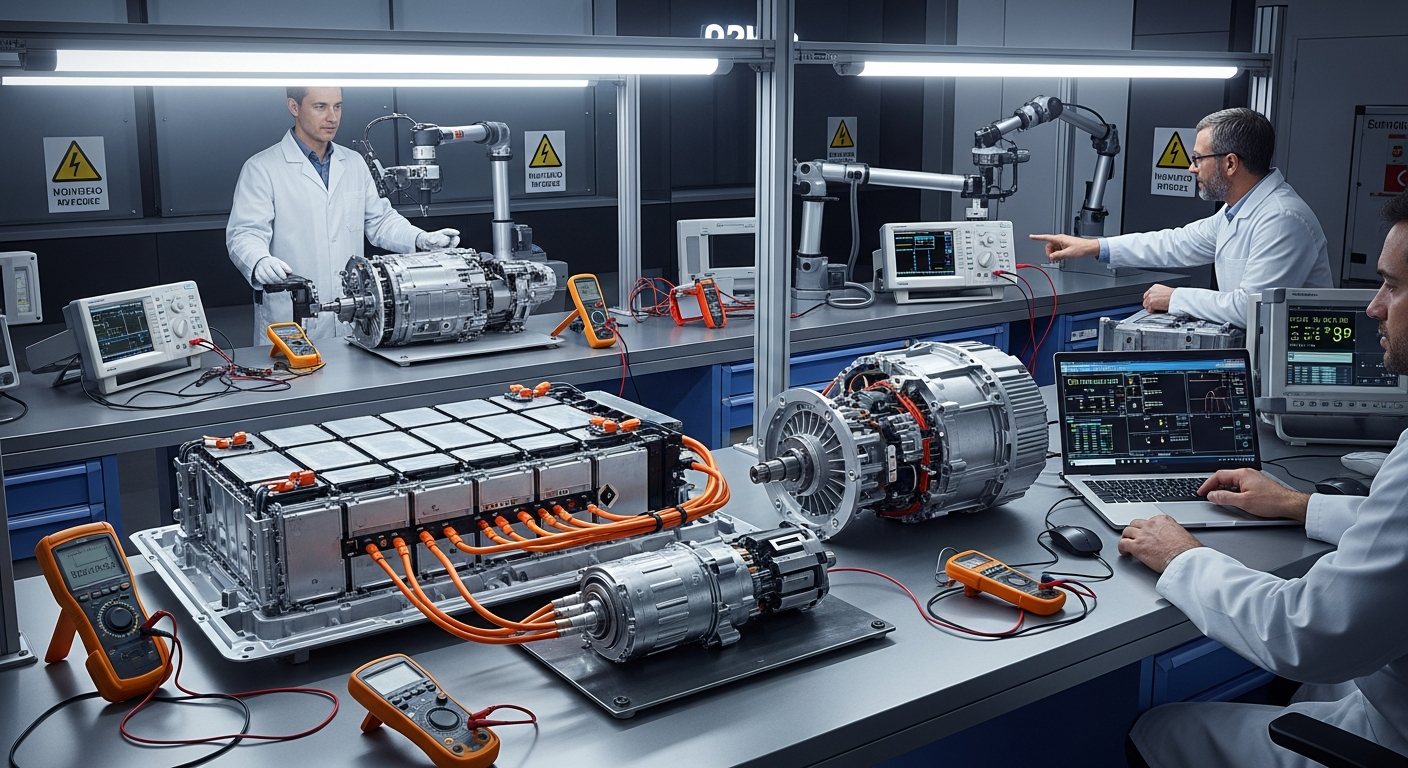
Electric and Hybrid Vehicle Technology: 800V Architecture & BMS Diagnostics
Course Overview
Master modern 800V architectures, high-voltage safety, and advanced Battery Management System (BMS) diagnostics for the next generation of electric vehicles.
"The global automotive industry is undergoing a revolutionary transformation driven by electrification, sustainability mandates, and rapid advancements in digital vehicle architectures. This technical training course equips automotive engineers, technicians, and technical specialists with a comprehensive understanding of electric and hybrid vehicle systems — from fundamental electrical principles to advanced fault diagnostics and component-level repair."
Learning Objectives
Understand fundamental principles of electric and hybrid vehicle propulsion systems
Identify and explain the function of all major high-voltage components
Analyze energy flow in BEV, HEV, PHEV, and series-hybrid architectures
Interpret operating logic of 800V high-efficiency platforms
Apply safe high-voltage isolation and lockout/tagout procedures
Perform safe vehicle de-energization for maintenance and repair
Diagnose Battery Management System (BMS) faults including cell imbalance and thermal issues
Analyze CAN-Bus and Automotive Ethernet communication faults
Utilize advanced diagnostic tools and software platforms
Perform structured troubleshooting using professional fault-finding methodologies
Curriculum Modules
- Evolution of electric mobility
- BEV vs HEV vs PHEV vs Series-Hybrid
- Energy conversion principles
- Power flow architecture comparison
- Efficiency and performance parameters
- High-voltage battery pack structure
- Inverter operation and switching logic
- DC/DC converter functionality
- Power Distribution Unit (PDU) architecture
- Traction motor types (PMSM, Induction, SRM)
- Advantages of 800V platforms
- Thermal efficiency and fast charging design
- Power electronics scaling principles
- Series-hybrid generator integration logic
- Energy management strategies
- Electrical hazard classification
- Personal Protective Equipment (PPE) standards
- Insulated tools and measurement devices
- Lockout/Tagout procedures
- Risk assessment and emergency response
- Service plug removal procedures
- Verification of zero voltage
- Capacitor discharge timing
- Isolation resistance testing
- Safe re-energizing protocol
- Cell voltage monitoring
- Cell balancing strategies (passive/active)
- Thermal management systems
- SOC & SOH algorithms
- Internal fault detection and logging
- Battery cooling architectures
- Heat pumps in EV systems
- Power electronics cooling circuits
- Thermal runaway prevention
- Efficiency optimization strategies
- CAN-Bus architecture and frame analysis
- Automotive Ethernet fundamentals
- UDS diagnostic protocols
- Fault code interpretation
- Software flashing and ECU programming basics
- Structured troubleshooting methodology
- Oscilloscope use in EV diagnostics
- Insulation fault tracing
- Data logging and signal interpretation
- Root cause analysis techniques
- Battery module inspection procedures
- Inverter and DC/DC converter testing
- HV cable inspection and repair
- Sensor and actuator replacement
- Complete diagnostic case study simulation